Contents
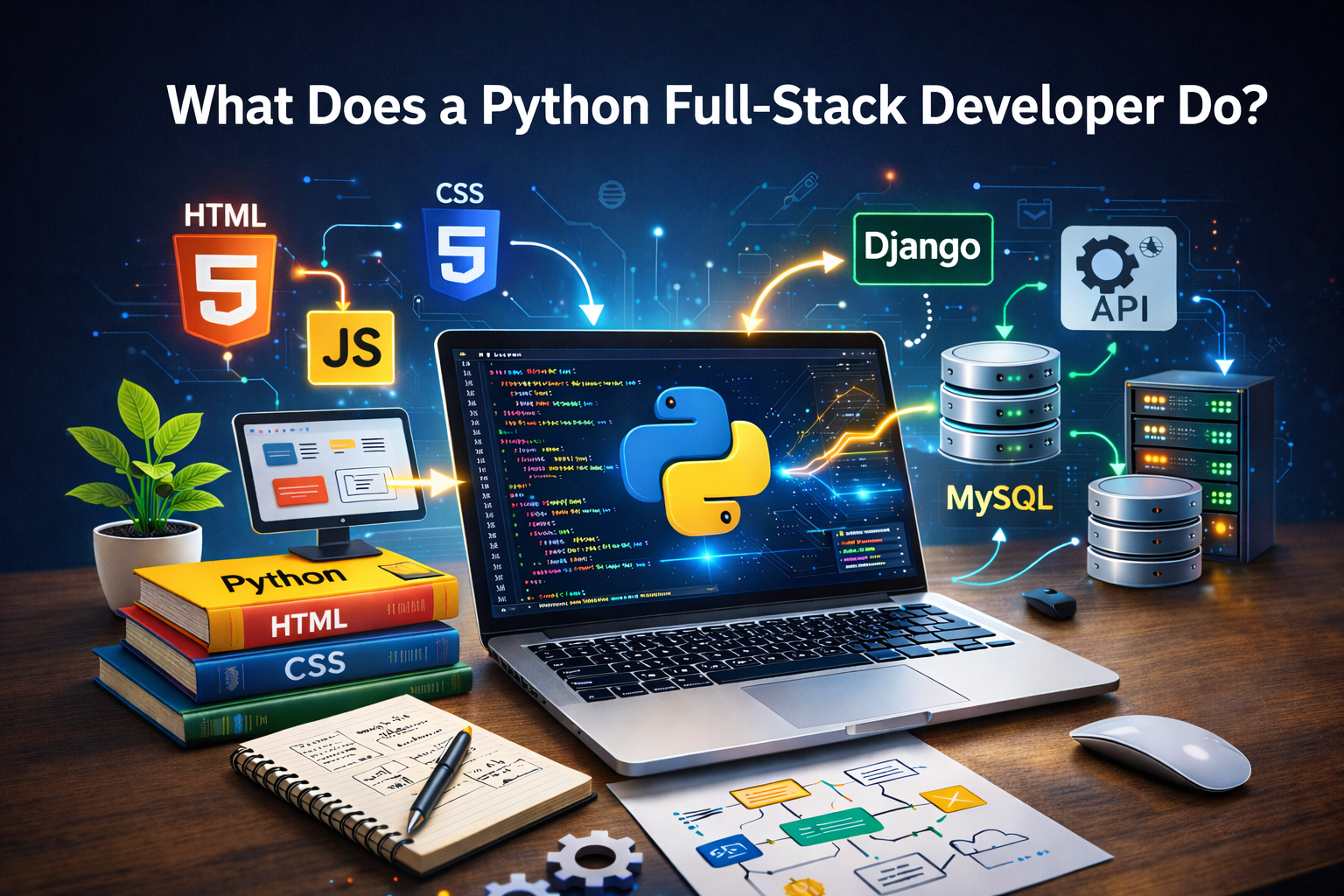
A Python full-stack developer is a versatile programmer who manages both front-end and back-end development. They create user-friendly interfaces using HTML, CSS, and JavaScript while ensuring smooth server-side operations with Python frameworks like Django and database management systems like MySQL.Python has become one of the most popular programming languages in the world, and full-stack development is one of the most in-demand skills in the IT industry. But many aspiring developers often wonder: what does a Python full-stack developer actually do?
Let’s explore this topic to give you a clear understanding of the role, responsibilities, and skills needed.
Who is a Python Full-Stack Developer?
A Python full-stack developer is a professional capable of handling both front-end and back-end development of a web application. They bridge the gap between user interfaces and server-side logic, ensuring smooth and efficient applications.
These developers are versatile and can work across the entire software stack—from designing interactive web pages to building databases, APIs, and cloud deployment pipelines.
What Does a Python Full-Stack Developer Do?
The responsibilities of a Python full-stack developer cover multiple areas:
1. Front-End Development
- Designing interactive and adaptable web pages with HTML, CSS, and JavaScript
- Integrating front-end frameworks for better UI experiences.
- Ensuring cross-browser compatibility and smooth navigation.
2. Back-End Development
- Writing server-side logic using Python frameworks.
- Managing databases and performing CRUD operations.
- Creating APIs to connect front-end and back-end efficiently.
- Implementing security, authentication, and authorization features.
3. Database Management
- Designing scalable database structures.
- Writing optimized queries for faster application performance.
- Ensuring data integrity, backups, and security.
4. Testing and Debugging
- Performing unit and integration testing.
- Identifying and fixing bugs or performance issues.
- Monitoring applications to maintain stability and reliability.
5. Deployment and Maintenance
- Deploying applications to cloud platforms.
- Using CI/CD pipelines to automate updates.
- Maintaining applications post-deployment and resolving technical issues.
When and Where Do Python Full-Stack Developers Work?
Python full-stack developers are needed whenever organizations require a complete application—from start-ups to large enterprises.
They often work in software companies, IT consulting firms, startups, or even freelance projects. The demand is consistent because businesses want developers who can handle both front-end and back-end tasks, reducing costs and improving project efficiency.
Why Are Python Full-Stack Developers in Demand?
- They provide complete solutions, managing the entire web application stack.
- Python’s simplicity and powerful frameworks allow faster development.
- Companies prefer full-stack developers for flexibility, efficiency, and cost-effectiveness.
- They can adapt to different technologies and tools, including cloud platforms and DevOps practices.
How to Become a Python Full-Stack Developer?
To become a Python full-stack developer, one needs a mix of technical skills, practical experience, and soft skills:
- Programming Languages: Python for back-end, JavaScript for front-end.
- Frameworks: Django or Flask for back-end, front-end libraries for UI.
- Databases: MySQL, PostgreSQL, or NoSQL databases.
- Version Control: Git for managing code and collaboration.
- Testing & Debugging: Unit testing and performance optimization.
- Cloud Platforms: AWS, Azure, or Google Cloud for deployment.
- Soft Skills: Problem-solving, collaboration, and effective communication.
A Python full-stack developer is a versatile professional who can handle every aspect of application development—from creating user interfaces to managing databases, writing server-side logic, and deploying applications to the cloud.
Frequently Asked Questions (Q&A)
Q1: Can a Python developer be a full-stack developer?
Yes, a Python developer can become a full-stack developer by learning front-end technologies and frameworks, along with back-end Python frameworks and database management.
Q2: How much time is needed to become a Python full-stack developer?
Depending on your learning pace and training program, it usually takes 6-12 months of dedicated practice, projects, and mentorship to become job-ready.
Q3: What industries hire Python full-stack developers?
Almost all industries including IT services, e-commerce, fintech, healthcare, and startups hire Python full-stack developers to build and maintain their applications.
Q4: What is the career scope of a Python full-stack developer?
With experience, full-stack developers can advance to roles like Senior Developer, Technical Lead, or Solution Architect, and they are also highly sought after for freelance and consulting projects.
👉 Begin your Python journey with Naresh i Technologies – Enrol now!
- Click here for Python full Stack Course