Contents
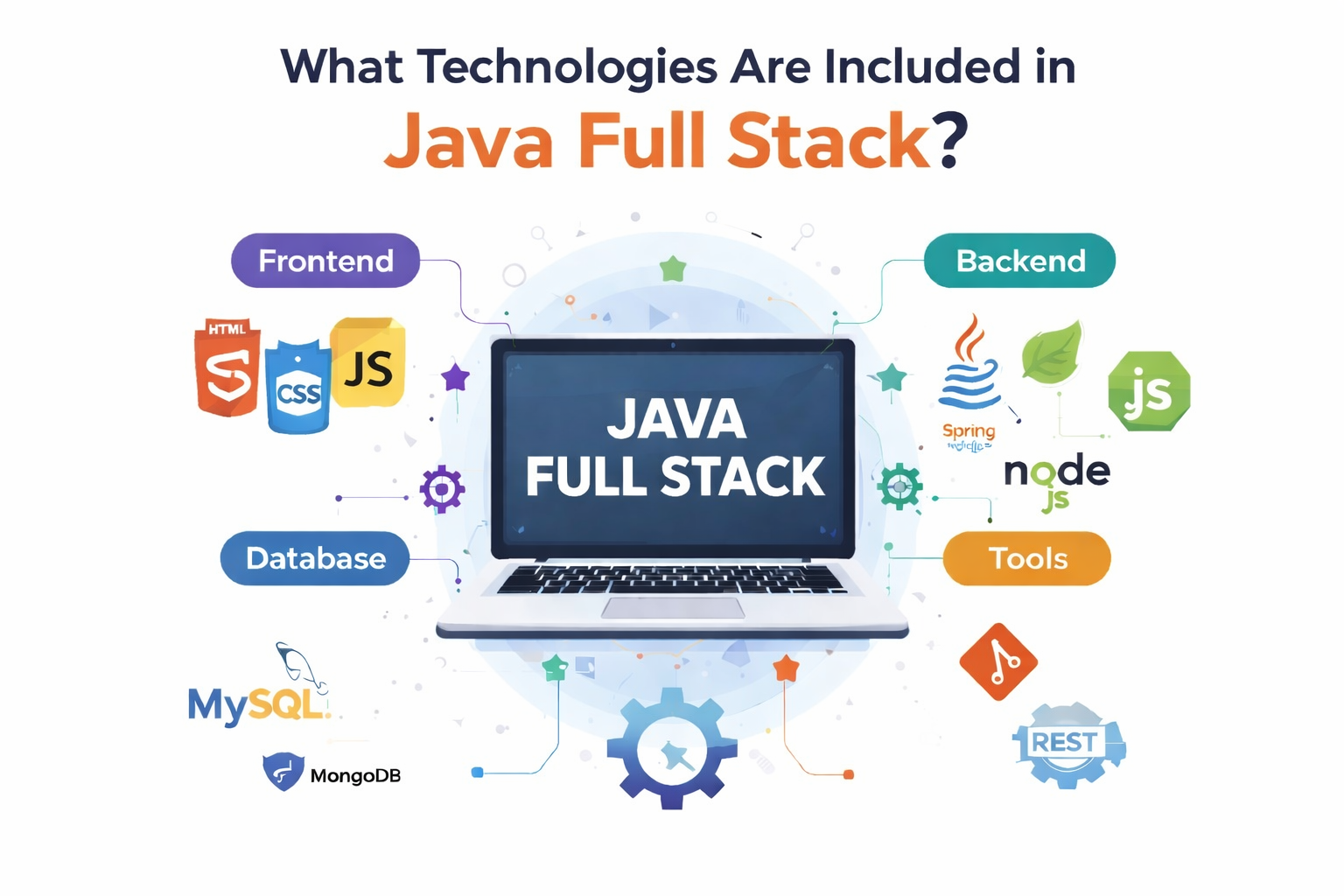
Java Full Stack Technologies include a combination of frontend, backend, and database tools used to build complete web applications. Developers use technologies like HTML, CSS, JavaScript, Spring Boot, and databases to create scalable applicationsJava Full Stack development is one of the most popular career paths in the software industry. Many companies are looking for developers who can build both the frontend (user interface) and the backend (server-side logic) of a web application. A Java Full Stack developer works with multiple technologies that together create a complete web application, from the user interface to the database and deployment.
Learning Java Full Stack technologies allows developers to understand the entire development process and build scalable, secure, and high-performance applications used in real-world business environments.
What is Java Full Stack Development?
Java Full Stack development refers to the practice of building complete web applications using Java for backend development and modern frontend technologies for the user interface.
A Java Full Stack developer works with technologies such as:
- Frontend development tools
- Backend frameworks
- Databases
- API integration
- Version control and deployment tools
By combining these technologies, developers can design, develop, test, and deploy full web applications.
Why Java Full Stack Technologies Are Important
Modern applications require smooth interaction between the frontend interface and backend systems. Java Full Stack technologies help developers manage all layers of an application efficiently.
Key benefits include:
- Ability to build end-to-end web applications
- There is strong demand for full stack developers across the current job market
- Strong support from enterprise companies
- Scalable and secure application development
- Opportunities to work on real-world projects
Because of these advantages, Java Full Stack developer skills are widely searched by students and professionals looking to enter the IT industry.
Technologies Included in Java Full Stack
Java Full Stack development includes several layers of technologies. Each layer plays an important role in building a complete web application.
1. Frontend Technologies
Frontend technologies focus on the visual and interactive part of a website or application that users interact with directly.
Common frontend technologies include:
HTML
HTML is used to structure web pages and define elements such as headings, forms, tables, images, and links.
CSS
CSS is used to style web pages and improve visual design. It controls layout, colors, fonts, spacing, and responsive design for different devices.
JavaScript
JavaScript adds dynamic functionality to web applications. It allows developers to create interactive features such as dynamic forms, animations, and real-time updates.
Modern Frontend Frameworks
Many Java Full Stack applications also use modern frontend frameworks to improve performance and development speed.
Examples include:
- Angular
- React
- Bootstrap
These frameworks help create responsive and user-friendly interfaces.
2. Backend Technologies
Backend technologies handle the core functionality of an application. They process user requests, apply business logic, and communicate with the database.
Java Programming Language
Java is the core technology used in Java Full Stack development. It is widely used because of its stability, scalability, and strong security features.
Java applications can run on multiple platforms using the Java Virtual Machine, making it a reliable choice for enterprise-level software systems.
Spring Framework
Spring is one of the most widely used frameworks in Java backend development. It simplifies application development and helps developers build scalable applications.
Important components include:
- Spring Boot for simplified configuration
- Spring MVC for building web applications
- REST services for API development
These frameworks help developers build modern web applications quickly and efficiently.
3. Database Technologies
Databases play a key role in storing and organizing application data. Java Full Stack applications commonly use relational and NoSQL databases.
Popular databases include:
- MySQL
- Oracle
- MongoDB
Developers use SQL queries to retrieve, update, and manage data stored in these databases.
4. API and Web Services
APIs enable communication and data exchange between different applications. In Java Full Stack development, developers often build RESTful APIs to connect frontend applications with backend systems.
Most APIs use JSON format to exchange data between systems. API development is a critical skill for building scalable web applications and integrating third-party services.
5. Version Control Systems
Version control tools help developers track code changes and collaborate with other developers.
Git is a widely used system for version control in software development..Platforms such as Git-based repositories allow developers to manage projects, track updates, and maintain code history efficiently.
6. Build and Dependency Management Tools
Build tools help manage project dependencies and automate the build process.
Common tools used in Java Full Stack projects include:
- Maven
- Gradle
These tools simplify project configuration and improve development productivity.
7. Application Servers
Application servers are used to deploy and run Java applications.
Some commonly used servers include:
- Apache Tomcat
- JBoss
These servers handle requests from users and run backend application code.
8. DevOps and Cloud Technologies
Modern software development often includes DevOps and cloud technologies to improve deployment and scalability.
Common tools and platforms include:
- Containerization tools
- Continuous integration tools
- Cloud platforms
These technologies help automate application deployment, testing, and scaling.
How Java Full Stack Technologies Work Together
A typical Java Full Stack application works in the following way:
- The application’s frontend, developed using HTML, CSS, and JavaScript, allows users to access and interact with its features.
- The frontend sends requests to backend services.
- The backend processes the request using Java frameworks.
- Data is stored or retrieved from the database.
- The backend sends a response back to the frontend in JSON format.
- The frontend displays the updated information to the user.
This structured process allows applications to handle large numbers of users efficiently.
Who Should Learn Java Full Stack Development?
Java Full Stack development is suitable for:
- Students who are interested in beginning a career in software development
- Developers who want to upgrade their programming skills
- IT professionals looking to move into web application development
- Individuals interested in learning both frontend and backend technologies
With proper training and practical experience, learners can build real-world applications and improve their employability.
What type of applications can be built using Java Full Stack technologies?
Java Full Stack technologies are used to build many types of applications, including:
- Enterprise business applications
- E-commerce platforms
- Banking and financial systems
- Web portals
- Cloud-based services
Java Full Stack development includes a combination of frontend technologies, backend frameworks, databases, APIs, and deployment tools. Together, these technologies help developers create complete web applications that are scalable, secure, and efficient.As demand for full stack developers continues to grow, learning Java Full Stack technologies can open doors to exciting career opportunities in the software industry. Structured training, hands-on projects, and mentorship can help learners gain the practical skills needed to succeed in this field.
Frequently Asked Questions
1.What skills are required to become a Java Full Stack developer?
Ans-To become a Java Full Stack developer, learners should understand frontend development, Java programming, backend frameworks, databases, API development, and version control tools.
2.Is Java Full Stack development a good career?
Ans-Yes, Java Full Stack development is considered a strong career option because many organizations use Java-based systems for enterprise applications. Full stack developers are highly valued because they can work on multiple parts of a project.
3.How long does it take to learn Java Full Stack?
Ans-The time required depends on the learning approach and practice. With structured training and real-world projects, many learners gain practical Java Full Stack development skills within several months.
- Click here for Java Full Stack Course